

- What is ultraviolet (UV) radiation?
Ultraviolet (UV) radiation is an electromagnetic radiation with wavelengths ranging from 10 to 400 nanometers (nm). As part of the solar spectrum, it carries more energy than visible light but less than X-rays. According to wavelength, it can be divided into three types: UVA, UVB, and UVC. Among them, most UVC radiation is absorbed by the Earth's atmosphere and cannot reach the surface, while UVA and UVB radiation can harm our eyes and skin.
- UV Protection Levels of Sunglasses refer to the standards that measure a pair of sunglasses' ability to block ultraviolet (UV) rays.
Prolonged exposure to ultraviolet (UV) rays can lead to various eye problems, including cataracts, macular degeneration, and photokeratitis. Therefore, choosing sunglasses with adequate UV protection is crucial for safeguarding eye health.
- UV Protection Levels in Sunglasses
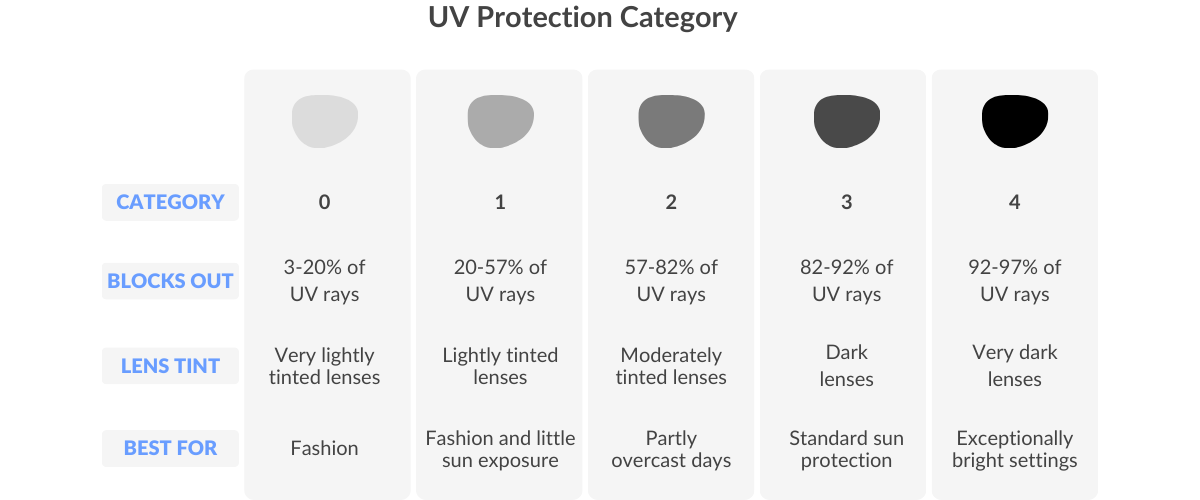
Sunglasses offer varying levels of UV protection, typically indicated by a UV protection rating system. This rating is generally labeled as Eye Protection Factor (EPF) or Ultraviolet Protection Factor (UPF), ranging from Level 0 to Level 4:
EPF/UPF 0: Provides negligible UV protection. Designed primarily as fashion eyewear with no effective defense against
UVA/UVB radiation. Not recommended for outdoor use due to lack of substantial UV-blocking capabilities.
EPF/UPF 1: Offers minimal UV protection. Suitable for low-intensity light conditions such as brief overcast outings or indoor use.
Not advised for prolonged outdoor activities under strong sunlight.
EPF/UPF 2: Provides substantial UV protection. Ideal for moderate light conditions including daily commuting and mild sunny
environments (e.g., urban outings, shopping).
EPF/UPF 3: Delivers high-performance UV protection. Specifically engineered for intense sunlight exposure during activities like
hiking, skiing, and beach outings (prolonged sun exposure or highly reflective environments).
EPF/UPF 4: Offers maximum UV-blocking efficacy, specifically recommended for extreme light conditions or light-sensitive individuals.
Essential for:
High-altitude mountaineering
Desert expeditions
Prolonged snow activities

- Regardless of Eye Protection Factor (EPF) or Ultraviolet Protection Factor (UPF) ratings, the critical selection criterion is ensuring 100% blockage of both UVA and UVB rays. This specification must be clearly labeled on the product or its documentation. Only sunglasses with 100% UV protection can effectively safeguard eyes from harmful radiation damage.
- Polarized Lenses and UV Protection
Polarized lenses are specifically designed to reduce glare caused by reflected light from flat surfaces like water, snow, or roads. While polarization enhances visual comfort and clarity, it does not inherently provide UV protection. However, many high-quality polarized sunglasses offer an additional 100% UV protection feature, making them an ideal choice for outdoor activities.
- The Importance of Lens Materials
The material of sunglass lenses directly affects their UV protection performance. Polycarbonate and high-index plastic lenses can provide basic UV protection due to their inherent properties, but it is still essential to confirm whether they meet the 100% protection standard. While glass lenses can block UV rays, adding a UV coating is recommended to achieve optimal protection.
- Children's UV Protection Guide
Children's eyes are more susceptible to UV damage than adults'. When purchasing sunglasses for children, pay attention to the following:
100% UVA/UVB Protection is a Must
Ensure the product clearly labels "100% UVA/UVB protection" to block all harmful UV rays.
Impact-Resistant Frames
Opt for flexible TR90 material, which is durable, lightweight, and less likely to break during active play.
Shatterproof Polycarbonate Lenses
Polycarbonate lenses offer natural UV resistance (blocking ≥99% of UV rays) and superior impact protection, ideal for kids' active lifestyles.
Anatomical Design for Children
Contoured nose pads for a secure fit without pressure points
Non-slip temple hooks to prevent slippage during movement
Larger frame coverage to reduce UV exposure from the sides.

- Conclusion
UV protection levels in sunglasses are crucial for safeguarding your eyes from harmful UV radiation. Always choose sunglasses that offer 100% UV protection and have an appropriate EPF/UPF rating for your activities and environment. Polarized lenses can enhance visual comfort but do not inherently provide UV protection. Consider the frame style and lens material, and prioritize your eye health by wearing sunglasses that effectively block both UVA and UVB rays.
As an outstanding custom sunglasses supplier with extensive expertise in eyewear customization, we offer bulk customized sunglasses and one-stop procurement solutions to meet all your OEM and ODM needs.
If you want to know more information about UV protection levels in sunglasses, please feel free to contact us. We will provide professional answers.


